- AI Rundown
- Posts
- The AI Rundown by Lightscape Partners - 1/16/26
The AI Rundown by Lightscape Partners - 1/16/26
Two Lightscape portfolio companies announce major new fundraises, assistants reshape the platform wars, and the Elon x OpenAI lawsuit gets a trial date

Ted Wagner
January 20, 2026
TechCrunch
Good morning and welcome back to another edition of The AI Rundown by Lightscape Partners. Last week, two more Lightscape portfolio companies were in the news announcing new fundraises: Etched and Parloa. We also published an article detailing our earlier investment in Articul8 following its latest funding announcement, which we highlighted in last week’s Rundown. You can read it here.
AI chip challenger Etched raised about $500 million at a roughly $5 billion valuation, one of the largest recent bets on non-Nvidia silicon. The round highlights sustained investor appetite for alternative AI hardware platforms, even as technical risk remains high and development cycles stretch over many years.
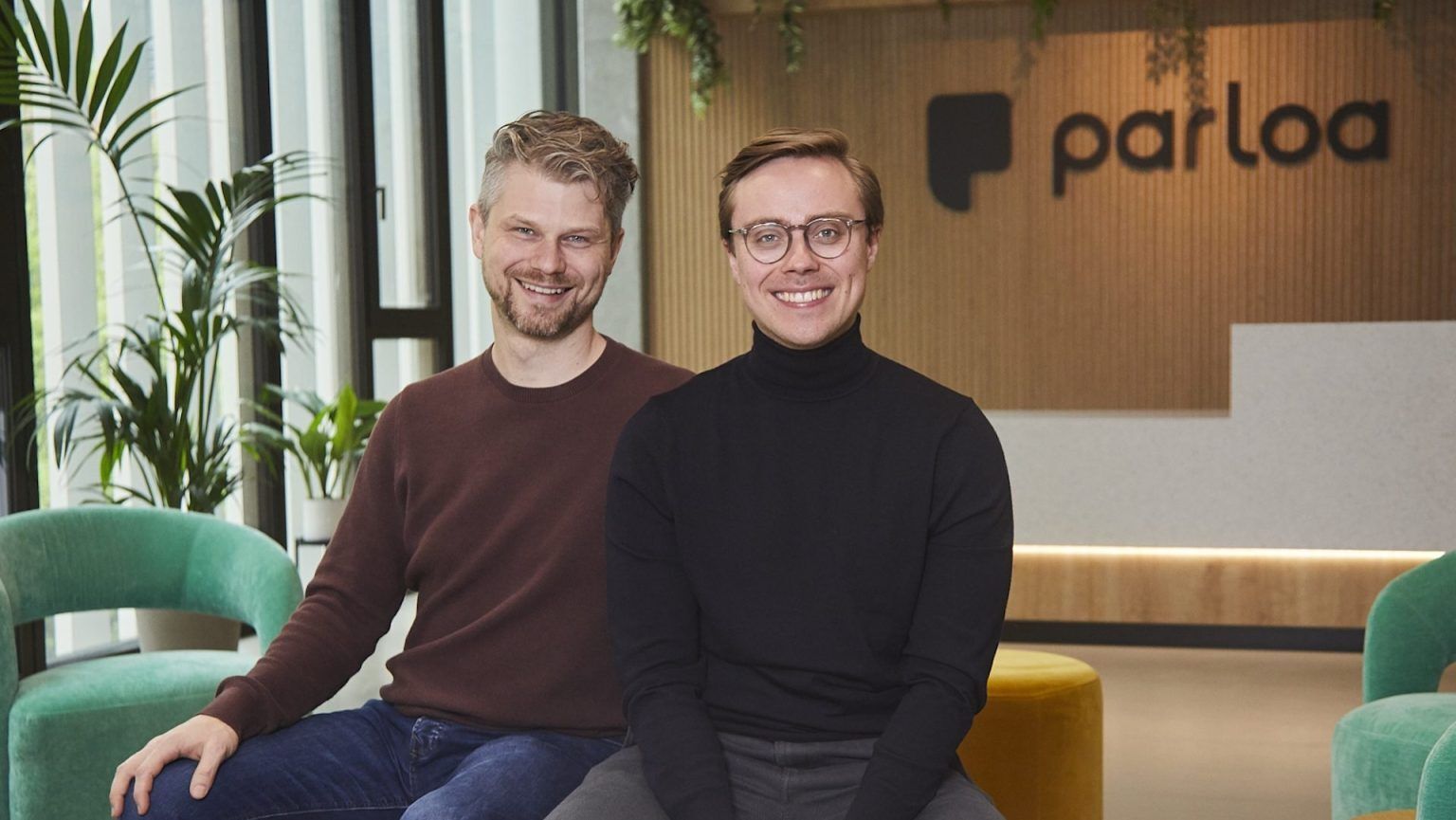
Enterprise AI company Parloa tripled its valuation to $3B in 8 months, raising a $350M in a round led by General Catalyst, showing strong investor belief in measurable ROI for AI driven customer support workflows.
SK Hynix committed roughly $13 billion to expand advanced chip packaging capacity, underscoring how AI bottlenecks are shifting beyond fabs into packaging, interconnects, and cooling. As demand for HBM and dense AI accelerators surges, control over packaging throughput is becoming a strategic advantage rather than a back-end manufacturing detail.
Apple’s decision to integrate Google’s Gemini models into a future Siri marks a notable shift in the assistant landscape. Rather than relying solely on in-house models, Apple is prioritizing performance and speed to market, signaling that the next phase of consumer AI competition may hinge more on distribution and integration than model ownership alone.
Stay tuned as we explore these stories and their implications for the future of AI, technology, and innovation.
If you haven’t yet, please support the newsletter by subscribing!
Hardware
SK Hynix commits about $13 billion to expand advanced chip packaging capacity for AI demand. Link.
SK Hynix plans to invest 19 trillion won in South Korea to build an advanced chip packaging plant.
Company is expanding packaging capacity needed for high performance AI chips that require dense interconnects and efficient cooling.
Investment supports SK Hynix efforts to stay competitive in AI memory supply chains as demand surges for HBM products.
New facility aims to reduce bottlenecks in packaging steps that increasingly limit how quickly AI accelerators reach markets.
SiFive adopts Nvidia NVLink to connect RISC-V CPUs and AI accelerators with higher bandwidth links. Link.
SiFive will integrate Nvidia NVLink technology into its RISC-V processor designs for faster chip to chip communication.
NVLink is widely used in AI clusters to move data efficiently between CPUs, GPUs, and specialized accelerators at scale.
Partnership could help cloud and device builders pair open standard RISC-V cores with Nvidia AI hardware more easily.
Move reflects growing interest in mixing CPU architectures while keeping high bandwidth interconnects that AI workloads increasingly require.
Models
Google releases TranslateGemma, open translation models for 55 languages derived from Gemini 3 architecture. Link.
TranslateGemma includes multiple parameter sizes, aiming to support deployments on mobile devices, laptops, and cloud infrastructure.
Google says the models improve translation quality and can handle text embedded in images as part of multimodal workflows.
Open release targets researchers and developers who want controllable translation systems without relying on closed commercial APIs.
Launch strengthens Google position in translation tooling as competitors push AI based products that emphasize tone control and context.
Product Launches
OpenAI launches ChatGPT Translate, a standalone translation tool that adds tone and complexity controls after conversion. Link.
ChatGPT Translate offers a two column translation interface and supports dozens of languages for text and spoken input.
Users can prompt the system to rewrite translations as more formal, simpler, or better matched to a specific audience.
Tool positions OpenAI against incumbent translation services by emphasizing contextual editing rather than only literal output quality.
Launch expands ChatGPT into focused utilities that can drive repeat usage without requiring users to craft complex prompts.
Consumer + Enterprise AI Applications
Apple signs a multi-year deal to integrate Google Gemini models into an upgraded Siri later in 2026. Link.
Deal will bring Google Gemini models into Siri, aiming to improve conversational answers, task handling, and language understanding.
Agreement gives Google broader distribution across Apple devices while Apple supplements its own AI work with an external model partner.
Partnership reflects shifting alliances as firms balance performance, privacy, and cost while racing to improve assistant experiences.
Integration could reshape consumer expectations for voice assistants if Siri gains stronger reasoning and contextual follow up abilities.
Anthropic expands into India and hires a former Microsoft executive to lead local enterprise and developer growth. Link.
Anthropic appointed Irina Ghose as India managing director and will open its first office in Bengaluru.
Company says India is already a top market for Claude usage, with heavy demand centered on coding assistance and tooling.
Local presence helps Anthropic sell directly to enterprises and partners while competing with OpenAI, Google, and regional startups.
Expansion highlights how major AI labs pursue geographic scale to capture developer ecosystems and fast growing enterprise adoption.
Content Creation
Wikipedia owner signs AI content training deals with major companies through a paid Enterprise API program. Link.
Wikimedia Foundation struck deals with Microsoft, Meta, Amazon, and Perplexity to provide paid access to Wikipedia content.
Agreements use the Enterprise API, aiming to reduce scraping traffic and offset rising server costs driven by AI crawlers.
Companies gain clearer licensing and data pipelines for training and retrieval, while Wikimedia secures revenue and usage controls.
Move signals a broader shift toward paid data access as creators and publishers seek compensation for AI model training inputs.
Startup Funding & Valuations
AI chip startup Etched raises about $500 million at roughly a $5 billion valuation to challenge Nvidia. Link.
Funding round led by Stripes will help Etched build and commercialize specialized processors aimed at large scale AI workloads.
Company is positioning its chips as cost and performance alternatives for customers frustrated by tight Nvidia supply and pricing.
Investors are backing silicon challengers as data center builders seek diversified hardware options for training and inference clusters.
Round underscores how AI infrastructure demand continues attracting large checks despite high technical risk and long development cycles.
Parloa raises $350 million at a $3 billion valuation to expand generative AI agents for customer service. Link.
Series D round led by General Catalyst will fund product expansion and global go to market for AI powered contact center automation.
Parloa says enterprises use its agents to handle complex service conversations, reducing wait times and routing more efficiently.
Company tripled valuation in eight months, showing strong investor belief in measurable ROI for AI driven customer support workflows.
Deal adds to a wave of large raises for AI agent startups competing to replace or augment human support teams at scale.
Deepgram raises $130 million at a $1.3 billion valuation to scale voice AI models and global expansion. Link.
Series C funding will support new speech models, international growth, and potential acquisitions as voice agents spread in enterprises.
Investors include AVP as lead, Tiger Global, and In-Q-Tel, reflecting broad interest across commercial and government adjacent buyers.
Deepgram provides real time speech recognition APIs and says more than 1,300 organizations already use its voice AI platform.
Round highlights how call center automation and conversational analytics remain among the clearest near term monetization paths for AI.
Higgsfield reaches a $1.3 billion valuation after raising $80 million to expand its generative video platform. Link.
Funding is an extension of its Series A and will support international expansion, enterprise offerings, and continued research.
Higgsfield says its tools generate consistent cinematic video clips, targeting creators and brands adopting AI for marketing content.
Company reported an annual revenue run rate near $200 million, suggesting fast paid adoption in a crowded generative video market.
Round shows investors favor startups that pair frontier models with clear product distribution and revenue, not only research claims.
Regulation + Legal
Trump administration announces new tariffs on certain high-end AI chips while carving out exemptions for US AI growth. Link.
Policy introduces a 25 percent tariff on select advanced AI chips, including Nvidia H200 class parts and comparable AMD models.
Administration cited national security concerns and aims to reduce reliance on overseas semiconductor production for critical technologies.
Order exempts chips destined for United States data centers, startups, and consumer devices to avoid slowing domestic AI adoption.
Tariffs could raise costs for some importers while accelerating onshoring pressure across the AI hardware supply chain and vendors.
Safety + Ethics
Regulators press xAI to curb Grok deepfake image abuse as governments weigh enforcement under online safety rules. Link.
Regulators in multiple countries scrutinized Grok after users generated sexualized deepfake images, including content involving minors.
xAI said it restricted image editing features to reduce nonconsensual content creation, though critics questioned remaining loopholes.
Officials signaled potential enforcement under platform safety laws, increasing pressure on Musk to implement stronger safeguards quickly.
Case shows how generative image tools can trigger rapid regulatory escalation when safeguards fail and harmful content spreads widely.
OpenAI
Judge schedules a 2026 jury trial in Elon Musk’s lawsuit accusing OpenAI of abandoning its nonprofit mission. Link.
Court set a trial date after finding Musk’s claims plausible, raising odds of internal disclosures about OpenAI governance decisions.
Musk alleges OpenAI leadership broke early assurances by shifting toward a for profit structure and deep partnership with Microsoft.
OpenAI disputes the allegations and argues Musk understood the restructuring, framing the case as an attempt to harass competitors.
Litigation could influence perceptions of lab accountability as AI companies seek capital while asserting public interest missions.
OpenAI signs a reported $10 billion deal with Cerebras for up to 750 megawatts of AI compute capacity. Link.
Multi-year agreement has Cerebras building data centers filled with its AI chips to run OpenAI inference workloads at scale.
OpenAI said the low latency systems will speed reasoning responses and improve throughput for ChatGPT and other deployed services.
Deal diversifies OpenAI infrastructure beyond Nvidia supply chains and expands capacity as demand grows for large model inference.
Agreement highlights how frontier labs increasingly secure dedicated compute through long contracts, not only on demand cloud rentals.
Thank you for reading the AI Rundown by Lightscape Partners. Please send any questions, comments, or suggestions to [email protected].