- AI Rundown
- Posts
- The AI Rundown by Lightscape Partners - 2/2/26
The AI Rundown by Lightscape Partners - 2/2/26
Microsoft Bets on Custom AI Chips, Google Brings World Models to Consumers, and a $300M Startup Round Signals the Rise of Agent Governance

Ted Wagner
February 02, 2026
Good morning and welcome back to another edition of The AI Rundown by Lightscape Partners.
Last week, I shared our perspective on Lightscape’s investment in Parloa. If you missed it, you can read more about our thesis on enterprise AI and why we’re excited about the company at the link here.
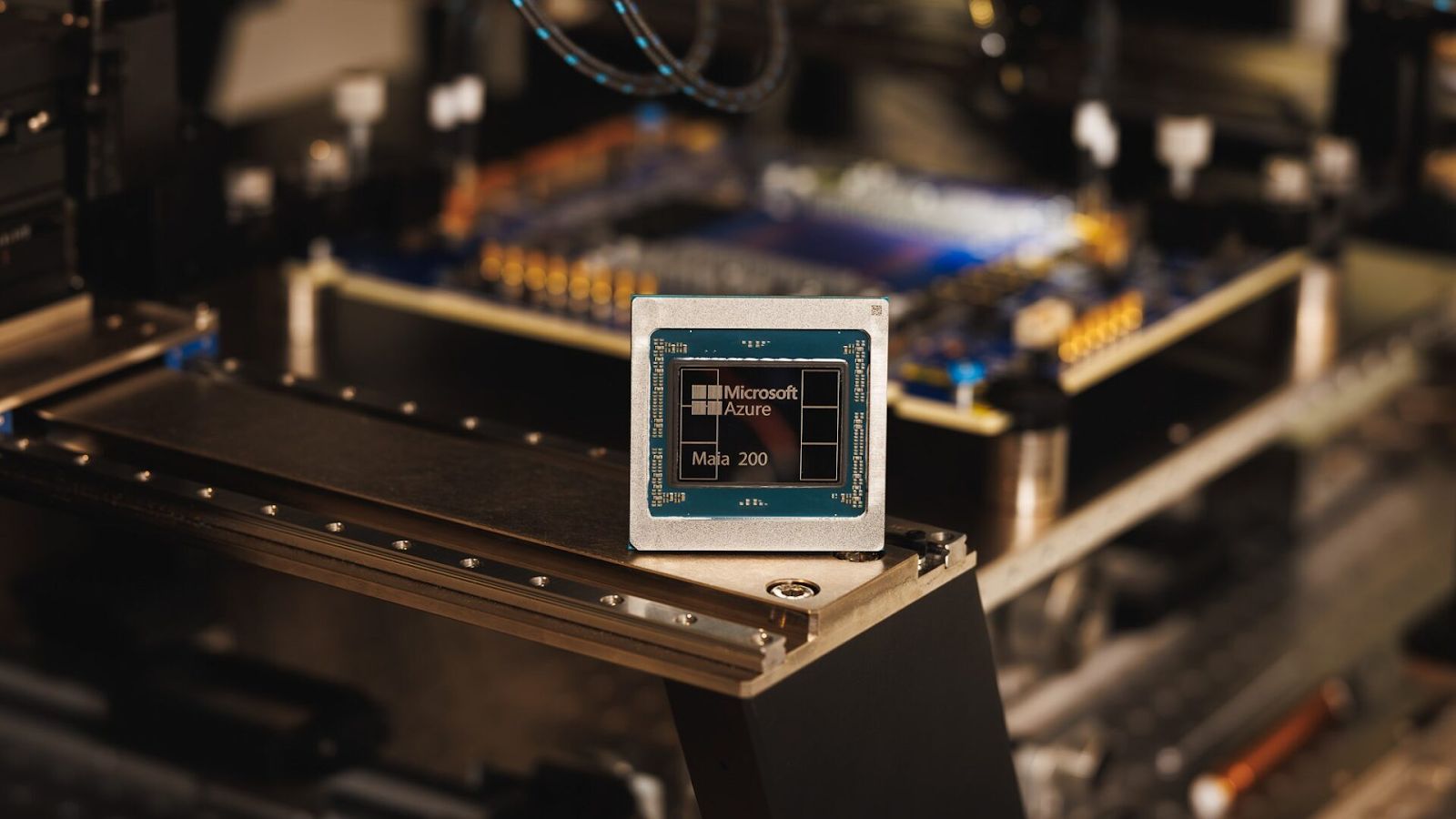
Microsoft pulled back the curtain on Maia 200, its custom AI accelerator built specifically to optimize inference across Azure. By designing silicon around real production workloads, Microsoft is pushing deeper into vertical integration as hyperscalers compete on cost per token, performance, and supply control in the AI infrastructure race.
Google DeepMind moved world models closer to mainstream use with the launch of Project Genie for Ultra subscribers in the U.S. The interactive experience turns prompts into navigable environments, signaling how AI is expanding beyond static images and videos toward controllable, real-time generated worlds with potential across gaming, simulation, and creative tools.
Ricursive raised a massive $300 million at a $4 billion valuation to build auditing and control systems for AI agents. As assistants increasingly take actions across software and data, investors are betting that governance layers will become core infrastructure, much like security and observability in today’s cloud stacks.
Stay tuned as we explore these stories and their implications for the future of AI, technology, and innovation.
If you haven’t yet, please support the newsletter by subscribing!
Hardware
Microsoft details Maia 200, a custom AI accelerator optimized for inference workloads across Azure. Link.
Microsoft says Maia 200 targets efficient inference, aiming to reduce cost per token for production deployments.
The chip is designed around real Azure workloads, with a focus on latency, throughput, and predictable scaling.
Microsoft positions Maia 200 as part of a full stack approach, pairing silicon, networking, and software tooling.
The announcement signals continued vertical integration as hyperscalers compete on AI infrastructure efficiency and supply.
Nvidia and CoreWeave expand their partnership to speed AI factory buildouts and capacity additions. Link.
The companies describe deeper collaboration on deploying GPU infrastructure to meet surging demand for training and inference.
CoreWeave highlights rapid expansion plans, while Nvidia frames the effort as accelerating AI factory rollout timelines.
The update underscores how specialized cloud providers are scaling alongside hyperscalers to supply compute at pace.
It also reflects ongoing supply chain and deployment bottlenecks, with partnerships used to secure hardware and integration.
Models
Arcee AI launches Trinity, a 400B parameter open model positioned for enterprise use cases. Link.
TechCrunch says the model is offered as open, with Arcee emphasizing deployability and control for enterprise customers.
The 400B parameter scale is framed as a push toward higher performance without fully closed distribution constraints.
Arcee positions the release as a way for companies to run advanced models with clearer governance and customization.
The launch adds pressure on incumbents as more vendors pitch open alternatives tailored for regulated and private environments.
Product Launches
Google DeepMind releases Project Genie, a world model experience for Ultra subscribers in the United States. Link.
Google describes Genie as generating interactive experiences from prompts, leaning on world modeling research from DeepMind.
The release targets an early adopter audience, signaling a consumer facing pathway for advanced world model demos.
Google frames the product as research in the open, pairing capability showcases with guarded access and eligibility limits.
Project Genie highlights competition to productize world models and interactive generation, beyond static images and videos.
Enterprise AI Applications
Anthropic introduces agent style plugins for Claude through Coworker, bringing tool use into more workflows. Link.
Axios reports Anthropic is shipping plugins that let Claude take actions across connected apps and services.
The move positions Claude for more agentic tasks, beyond chat, by enabling structured tool invocation and orchestration.
Anthropic’s rollout lands amid a broader race to make assistants execute multi step work reliably and safely.
Enterprise adoption will hinge on permissioning, auditability, and tight controls around what agents can access and change.
Content Creation
Corning and Meta sign a multiyear deal worth up to $6B to accelerate U.S. data center buildouts. Link.
Corning says the agreement supports rapid expansion of data center infrastructure to meet compute growth demands.
Meta is cited as a customer under a multi year supply arrangement tied to U.S. buildout timelines and scale.
The announcement signals long lead times for critical infrastructure components as AI expands power and footprint needs.
Large supply commitments are becoming a competitive lever for capacity, helping lock in materials during demand spikes.
SanDisk forecasts profit above estimates, citing AI driven data center demand for storage products. Link.
Reuters reports SanDisk expects stronger profitability as hyperscalers and data centers expand to serve AI workloads.
The company links the outlook to higher demand for flash storage tied to AI training, inference, and data pipelines.
The update adds to signals that AI spend is broad, extending beyond GPUs into storage, networking, and supporting gear.
For operators, storage performance and cost are becoming key constraints as model sizes and data volumes keep rising.
Startup Funding & Valuations
Ricursive raises $300M at a $4B valuation to build tools for auditing and controlling AI agents. Link.
TechCrunch reports the funding targets governance tooling for agentic systems, focused on visibility and control layers.
Ricursive frames the opportunity around rising enterprise adoption of agents that can act across systems and data.
The round size signals investor conviction that agent oversight will be a major market as autonomy increases.
If agents proliferate, auditing and control tools may become as standard as logging and security in cloud platforms.
Outtake raises $40M to help creators protect and manage digital identity across platforms and content. Link.
TechCrunch says Outtake is focused on identity protection as synthetic media and impersonation risks rise quickly.
The company positions its tools around establishing authenticity and preventing misuse of a creator’s likeness.
Funding indicates growing investor interest in trust infrastructure, not just generation models and consumer apps.
Identity and provenance products could become baseline controls as AI generated content expands across the internet.
Phia, a shopping assistant, raises $35M as it pushes AI guided product discovery and decision support. Link.
TechCrunch reports the company is positioning AI to streamline shopping research, comparisons, and purchase decisions.
Phia’s raise highlights continued venture appetite for consumer assistants that package AI into specific vertical workflows.
Competition remains intense, with retailers and platforms racing to build similar guided shopping experiences in house.
Success will likely depend on differentiated data, trusted recommendations, and integration with existing commerce ecosystems.
Neocloud startup PaleBlueDot is valued at $1B after a $150M funding round led by B Capital. Link.
Reuters reports the round values PaleBlueDot at about $1 billion as demand grows for alternative AI compute providers.
The company is framed as part of the neocloud wave targeting specialized infrastructure and capacity for AI workloads.
A $150M raise signals that capital is still flowing to compute supply, not just model builders and application layers.
Valuation and funding trends suggest persistent scarcity, with newer providers pitching faster deployment and focus.
Synthesia raises $200M to expand AI video avatar tools as demand grows for synthetic content creation. Link.
The Guardian reports the round is led by Google Ventures, backing Synthesia’s push to scale AI generated video output.
Synthesia’s product focus is AI avatars, enabling companies to produce videos without traditional filming workflows.
The funding underscores sustained investment in content creation tooling, even as deepfake risks drive scrutiny and controls.
Adoption will likely hinge on quality, rights management, and safety measures that prevent misuse of generated likenesses.
Regulation + Legal
California’s Senate passes a bill to regulate lawyers’ use of AI, aiming to tighten accountability in legal work. Link.
Reuters reports the legislation targets how attorneys use AI tools, responding to risks from errors and hallucinations.
The bill reflects growing pressure to align professional standards with rapidly adopted generative AI assistance tools.
Lawmakers are signaling that disclosure and oversight expectations will extend beyond tech firms into regulated professions.
If enacted, similar rules could spread, pushing legal organizations to implement governance, review, and documented controls.
EU regulators open proceedings on Google, scrutinizing Gemini and search data access under the Digital Markets Act. Link.
AP reports regulators are examining whether Google is meeting obligations tied to competition and data access rules.
The focus includes how Gemini and search interfaces may affect rivals, and how data sharing requirements are applied.
The case shows AI features are now intertwined with platform regulation, not treated as separate experimental products.
Outcomes could reshape how AI assistants integrate with dominant platforms across Europe, especially around defaults and access.
OpenAI
OpenAI discusses a new funding round that could value the company around $340B, Reuters reports. Link.
Reuters says the talks point to continued appetite for frontier model development despite high costs and scaling pressures.
A valuation near $340 billion would place OpenAI among the world’s most valuable private technology companies.
The report highlights how capital markets are still underwriting compute heavy AI roadmaps, not just near term revenue.
If completed, the round would influence competitor fundraising and the pace of investment in models, chips, and infrastructure.
Senator Elizabeth Warren questions whether OpenAI could seek a taxpayer backed bailout, as scrutiny around funding grows. Link.
The Verge reports Warren sent a letter raising concerns about OpenAI’s finances and the possibility of public support.
The letter reflects broader political attention on AI firms’ risk taking, governance, and reliance on massive capital needs.
As compute spending rises, policymakers may increasingly view AI infrastructure as a systemic risk and budget issue.
The episode shows how leading AI labs now face both market pressure and direct government scrutiny on funding models.
Thank you for reading the AI Rundown by Lightscape Partners. Please send any questions, comments, or suggestions to [email protected].